
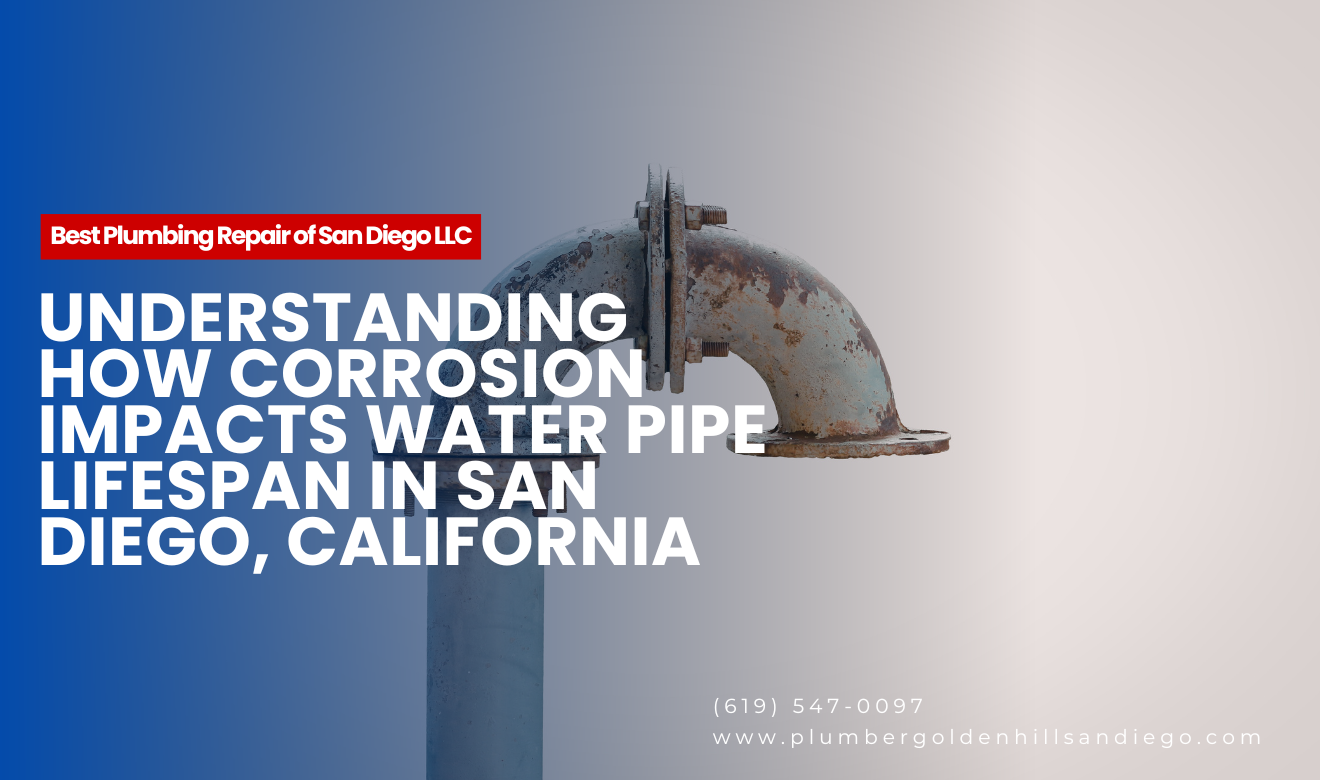
Corrosion shortens the life of water pipes by slowly eating away the metal, thinning the pipe walls, and creating weak spots that eventually leak or burst—and that’s exactly what “how corrosion affects pipe lifespan San Diego” comes down to. In San Diego, this can show up as pinhole leaks in copper lines, rusty or discolored water from aging galvanized steel, or recurring slab leaks that seem to pop up more often over time. For example, you might notice water pressure dropping in the shower because corrosion buildup is narrowing the pipe from the inside, or you may spot a damp patch on drywall where a tiny corroded section finally gave out. The longer corrosion goes unchecked, the faster small issues turn into bigger repairs and shorter overall pipe lifespan.
Why Corrosion Is Such a Big Deal for San Diego Plumbing
When people search for how corrosion affects pipe lifespan San Diego, they’re usually dealing with one of two realities: either their home is older (galvanized, cast iron, early copper), or they’re seeing repeat leaks and want to know why it keeps happening. Corrosion is more than “rust.” It’s a chemical reaction that degrades metal over time—and once pipe walls thin out, failures become more frequent and more expensive.
In coastal and near-coastal neighborhoods, salt in the air can accelerate metal deterioration on exposed components. In other areas, water chemistry (pH, hardness, disinfectants) and high pressure can be the bigger drivers. No matter the neighborhood, how corrosion affects pipe lifespan San Diego often comes down to a combination of environment, pipe material, and maintenance history.
Quick Answer: How Corrosion Affects Pipe Lifespan in San Diego
How corrosion affects pipe lifespan San Diego can be summed up like this: corrosion reduces pipe diameter, weakens pipe walls, damages joints and fittings, and increases the likelihood of leaks—especially pinhole leaks and slab leaks—until replacement becomes the most cost-effective option.
What corrosion does inside your plumbing
- Thins the metal: Pipe walls become fragile and fail under normal pressure changes.
- Creates buildup: Mineral and corrosion scale narrows the inner diameter, reducing flow.
- Destroys joints: Fittings and soldered or threaded joints become weak points.
- Triggers repeat leaks: One repair often reveals the next weak spot nearby.
Common Types of Pipe Corrosion Homeowners See
Understanding the type of corrosion helps explain how corrosion affects pipe lifespan San Diego homes and why symptoms can look different from property to property.
1) Uniform corrosion (general wall thinning)
This is “overall” metal loss over time. You might not notice it until a leak forms or water pressure drops from internal scaling.
2) Pitting corrosion (pinhole leaks)
Common with copper, pitting causes tiny crater-like holes that suddenly leak. If you’re seeing recurring pinhole repairs, that’s a classic example of how corrosion affects pipe lifespan San Diego copper systems.
3) Galvanic corrosion (mixed metals)
When dissimilar metals touch (for example, copper connected directly to galvanized steel), one metal corrodes faster. Dielectric unions and correct transitions matter.
4) Crevice corrosion (fittings and tight areas)
This occurs where water gets trapped—around joints, under deposits, and near valves—making failures more likely at fittings than straight pipe runs.
Why San Diego Homes Are Prone to Corrosion Issues
There isn’t one single cause, which is why how corrosion affects pipe lifespan San Diego varies by home age, location, and system design.
Local factors that often speed up corrosion
- Older housing stock: Many homes still have aging galvanized steel, cast iron drains, or early-generation copper.
- Coastal air exposure: Salt-laden air can accelerate corrosion on exposed exterior piping and components.
- Water chemistry: pH, alkalinity, hardness, chloramines, and dissolved oxygen all influence corrosion behavior.
- High water pressure: Excess pressure adds stress and increases leak likelihood once corrosion has thinned walls.
- Recirculation systems: Hot water recirc can increase wear inside lines if conditions are corrosive.
Symptoms That Point to Corrosion (Not Just “Old Pipes”)
Because how corrosion affects pipe lifespan San Diego often shows up gradually, homeowners may live with warning signs for months or years.
Signs corrosion is actively shortening pipe life
- Rusty, brown, or yellow-tinted water (often galvanized steel or iron components)
- Metallic taste or noticeable odor changes
- Frequent pinhole leaks in copper lines
- Recurring slab leaks or wet spots that come back after repairs
- Low water pressure from internal scaling and narrowed pipe diameter
- Fluctuating water temperature due to restricted flow
- Visible green/blue staining around copper fittings (can indicate corrosion or micro-leaks)
How Corrosion Impacts Different Pipe Materials
One of the most helpful ways to understand how corrosion affects pipe lifespan San Diego is to compare materials commonly found in local homes.
| Pipe material | Typical corrosion behavior | Common symptoms |
|---|---|---|
| Copper | Pitting and pinholes, especially with aggressive water chemistry or high velocity | Pinhole leaks, green/blue stains, repeat leak repairs |
| Galvanized steel | Internal rust/scale buildup; gradual wall loss and clogging | Discolored water, low pressure, clogged aerators |
| Cast iron (drains) | Rusting, scaling, and eventual cracking; corrosion can catch debris | Recurring clogs, sewer odors, slow drains, leaking joints |
| Brass/valves/fittings | Can corrode at threads and seals; dezincification possible in certain waters | Weeping at valves, brittle fittings, sudden failures at joints |
The Hidden Cost: Corrosion and Water Damage Risk
Even a “small” corroded leak can cause major repair bills—especially when it happens in walls, ceilings, or under slabs. That’s why how corrosion affects pipe lifespan San Diego is also a question about protecting your home’s structure.
Where corrosion-related leaks commonly cause damage
- Behind showers and tub valves (slow leaks can rot framing)
- Under slab foundations (moisture migration can warp flooring)
- Ceilings below bathrooms (stains often appear late)
- Kitchen sink cabinets (repeated dampness leads to mold and delamination)
If you suspect a leak but can’t pinpoint it, this guide on slab leak detection in San Diego outlines what professionals look for when leaks are hidden.
What Makes Corrosion Worse (and What You Can Control)
A big part of how corrosion affects pipe lifespan San Diego is that corrosion accelerates under certain conditions. The good news: several of those conditions are manageable.
Top accelerators of corrosion
- Excess water pressure: Stress + thinning pipe walls = more leaks.
- High flow velocity: Erosion-corrosion can wear copper faster in certain runs.
- Water chemistry out of balance: Extremely low pH (acidic) or certain disinfectant levels can contribute.
- Improper metal transitions: Direct connections between dissimilar metals can trigger galvanic corrosion.
- Neglected maintenance: Small leaks left untreated keep corrosion active and spreading.
How to Extend Pipe Life in San Diego (Practical Steps)
If you’re trying to reduce the impact of how corrosion affects pipe lifespan San Diego, start with the steps that prevent new damage and reveal existing weak spots early.
1) Keep water pressure in a safe range
Many homes benefit from pressure control. High pressure can turn a thinning pipe wall into a burst line during a pressure spike. If pressure is consistently high or fluctuates, consider having a plumber evaluate your system and install or service a pressure regulator.
Related service: Water Pressure Regulators
2) Fix “minor” leaks immediately
- A slow drip at a valve can corrode fittings and nearby pipe.
- A tiny pinhole can spray inside a wall and cause hidden damage fast.
3) Consider whole-home repipe planning (before it becomes urgent)
When corrosion is widespread, patch repairs can become a cycle. Strategic repiping (partial or whole-home) is often cheaper than repeated emergency calls, water damage repairs, and insurance headaches. This is especially true when how corrosion affects pipe lifespan San Diego homes with galvanized lines that are already heavily scaled.
4) Inspect drain and sewer materials too
Corrosion isn’t just a supply-line issue. Cast iron drains and older sewer sections can corrode, scale up, and snag debris—leading to recurring clogs. Understanding the overall plumbing system helps homeowners avoid treating symptoms (like clogs) while the pipe itself is failing.
Real-World Scenario: The “One Leak After Another” Pattern
A common pattern tied to how corrosion affects pipe lifespan San Diego is this: a homeowner repairs one leak, then another appears a few feet away weeks or months later. That’s not bad luck—it’s a sign the pipe wall is thinning throughout a larger section.
What this usually indicates
- Corrosion is system-wide rather than isolated.
- Pressure spikes are stressing weak areas.
- Repairs are buying time, but not solving the underlying deterioration.
When to Repair vs. When to Replace Corroded Pipes
Homeowners searching how corrosion affects pipe lifespan San Diego often want a clear rule. While every property is different, these guidelines are commonly used in the field.
Repair may make sense when
- The leak is at a single accessible fitting or valve.
- The rest of the line is in good condition (verified by inspection/testing).
- The home has newer piping and the issue is isolated.
Replacement is often smarter when
- You’ve had multiple leaks in the same material (especially copper pinholes).
- Water pressure is dropping due to internal scaling.
- Discolored water is persistent.
- Galvanized supply lines are original and heavily corroded.
- Slab leaks are recurring—repairs can become more disruptive than rerouting.
Why Professional Testing Matters (Not Guesswork)
Because how corrosion affects pipe lifespan San Diego can involve pressure, chemistry, and materials, a professional assessment often saves money. A thorough evaluation may include:
- Static and dynamic pressure testing
- Visual inspection of exposed lines and fittings
- Moisture detection for hidden leaks
- Video inspection for drain/sewer corrosion (where applicable)
- Discussion of pipe age/material and repair history
Built to Last: Smart Next Steps for San Diego Homeowners
To protect your home long-term, treat how corrosion affects pipe lifespan San Diego as a planning issue—not just an emergency issue. If you’re seeing early symptoms (pressure loss, discoloration, repeat leaks), you can often prevent major damage by addressing pressure, inspecting vulnerable sections, and choosing proactive repairs before corrosion forces a sudden failure.
Licensed plumbers who regularly work on San Diego-area systems can identify corrosion patterns quickly, recommend code-compliant materials, and help you prioritize the fixes that deliver the biggest lifespan gains—whether that’s pressure regulation, targeted line replacement, or a staged repipe plan.
Keyword check: If you’re still researching how corrosion affects pipe lifespan San Diego, the most important takeaway is that corrosion rarely improves on its own. The earlier it’s measured and managed, the longer your plumbing system can serve you reliably.
Frequently Asked Questions
Stop Corrosion Before It Starts Costing You Real Money
Not sure if that pressure drop, discolored water, or “another leak” is just normal wear—or corrosion quietly chewing through your pipes? Get a clear, practical game plan from Best Plumbing Repair of San Diego LLC. We’ll help you pinpoint what’s happening, reduce the risk of pinhole and slab leaks, and recommend the smartest next step—whether that’s a targeted repair, pressure regulation, or proactive repipe planning.


