
Executive Summary
A burst pipe emergency in San Diego is definitively resolved by immediately isolating the water supply, completing a code-compliant repair matched to the pipe material, and confirming stable, safe system pressure before fully restoring service. The fastest, safest outcome combines rapid shutoff verification, controlled access to the failure point, and post-repair testing to prevent repeat blowouts and limit water damage.
Executive Key Takeaways
- Isolation First: The priority is stopping uncontrolled flow by closing the main shutoff at the meter (or isolating a manifold branch) and depressurizing the line before any repair work begins.
- Repair Must Match the System: Permanent repairs require removing damaged pipe back to sound material and installing listed, code-compliant fittings using the correct joining method for copper, PEX, or CPVC.
- Pressure Control Prevents Repeat Failures: After the repair, confirming static pressure and evaluating regulators/thermal expansion reduces the risk of a second failure at another weak joint, valve, or connector.
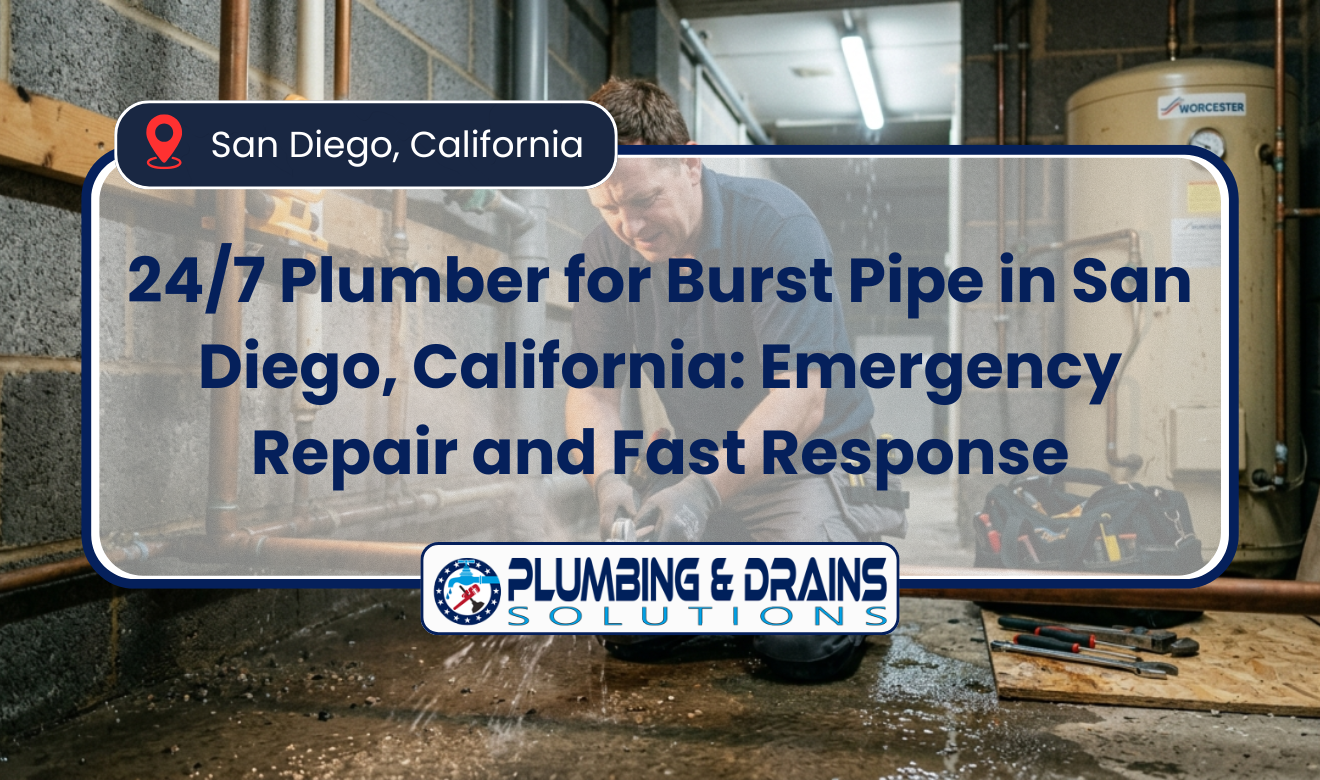
A 24/7 plumber for burst pipe San Diego provides immediate emergency isolation, leak control, and code-compliant pipe repair any hour in San Diego, California. A burst line can start at a failed CPVC elbow in a garage, a split copper joint in a crawlspace, or a ruptured PEX run behind drywall after a pressure spike. Fast response focuses on stopping the active flow first by locating and closing the house main shutoff near the meter box at the curb, or by isolating a branch line at a manifold when available. Common local scenarios include slab-leak blowouts in older neighborhoods, pinhole copper leaks accelerated by water chemistry, and irrigation supply line ruptures that flood yards and backflow into garages. Emergency repair steps typically include pressure testing to confirm the failure point, removing damaged sections, installing new pipe with proper fittings, adding shutoff valves for future isolation, and verifying static pressure stays within safe residential range using a gauge. Water damage prevention work can include draining the line, controlled drywall access to reduce spread, temporary caps for overnight stabilization, and documentation of affected areas such as baseboards, cabinets, and flooring near the leak path.
What “Burst Pipe Emergency” Means in San Diego Homes
A burst pipe emergency is defined by active, uncontrolled water discharge or a line failure that cannot safely remain pressurized. In San Diego, rapid isolation and code-compliant repair are prioritized because water damage can spread through slab edges, garages, and multi-level framing fast.
Most emergency calls fall into one of these categories:
- Supply-side failures (hot/cold domestic water): split copper, failed CPVC joints, ruptured PEX, failed angle stops, or broken hose bibbs.
- Pressure-related events: sudden high pressure, failing pressure regulator, or thermal expansion that stresses joints and valves.
- Hidden failures: leaks behind walls/ceilings, under slabs, or in crawlspaces that become “burst” events once a weak point opens fully.
Because San Diego housing stock spans older galvanized/copper systems through modern PEX manifolds, the first steps should always treat the system as live until verified isolated and depressurized.
Immediate Actions Before the Plumber Arrives (Damage Control Checklist)
Fast homeowner action reduces structural damage and mold risk while keeping the site safer for repair work. The goal is to stop water flow, protect electrical hazards, and document visible impact.
- Shut off water at the main: typically at the meter box near the curb; turn the valve clockwise to close.
- If you have a manifold: shut off the affected branch line (common in PEX systems).
- Open a low fixture (tub spout or hose bibb) to depressurize and drain residual water.
- Turn off water heater energy source if hot water lines are compromised:
- Gas: set control to OFF (follow manufacturer label).
- Electric: switch off the breaker to avoid dry-firing heating elements.
- Electrical safety: if water is near outlets, panel, or appliances, shut off power to the affected area at the breaker.
- Contain water: towels, buckets, wet/dry vacuum; move rugs and lift furniture legs.
- Document damage: photos/video of wet drywall, baseboards, cabinets, flooring seams, and any dripping from light fixtures.
If you suspect the failure is under the slab or behind a wall, use a staged approach for locating it rather than random openings; the steps in locating a leaking pipe in the wall align with what technicians look for on arrival.
How a 24/7 Emergency Plumber Stabilizes a Burst Line
Professional stabilization follows a specific sequence: isolate, verify, expose, repair, then test under controlled pressure. This order reduces secondary failures and prevents re-pressurizing a compromised section.
On-site emergency workflow commonly includes:
- Verification of shutoff effectiveness using fixture flow checks and, when needed, pressure gauge confirmation.
- Targeted leak localization (visual inspection, moisture mapping, and controlled access points).
- Removal of damaged pipe back to sound material (no hairline cracks, no green/blue corrosion pits, no heat damage).
- Correct joining method for material type:
- Copper: cut, ream, clean, and join using approved soldering/brazing methods or listed press fittings where permitted.
- PEX: listed crimp/clamp/expansion fittings matched to tubing type and size.
- CPVC: proper primer/cement system with cure time considerations.
- System test: restore water slowly, check for leaks at working pressure, and confirm fixtures operate without pressure drop.
- Stabilization options when full restoration must be staged: temporary caps, partial isolation, or a temporary bypass to restore essential service.
Plumbing repairs in California must follow adopted building and plumbing code requirements (California Plumbing Code as adopted by the state and enforced locally). That means fittings, pipe, and valves must be listed for potable water use and installed per manufacturer instructions and code rules on support, transitions, and protection.
San Diego-Specific Causes of Burst Pipes (What Technicians See Most)
Local housing layouts and water system conditions influence how and where failures occur. In practice, most emergencies tie back to corrosion, pressure regulation issues, aging connections, or irrigation and exterior lines.
- Pinhole leaks in copper that escalate into splits: often associated with internal corrosion patterns that can worsen under higher pressure or turbulence near elbows.
- Older slab plumbing: failures can surface as sudden wet spots, warm floor areas, or water audible under slab; blowouts can occur once a weak segment opens fully.
- Failed plastic fittings: brittle CPVC at joints or stress-cracked fittings in garages, attics, and mechanical closets.
- Irrigation supply ruptures: yard flooding, water entering garages, and potential backflow concerns if a cross-connection exists or vacuum breakers are missing/damaged.
- Excessive static pressure: accelerates wear on angle stops, supply lines, and appliance connectors.
When a suspected slab event is involved, precision detection matters before cutting concrete; many property owners start with professional slab leak detection in San Diego to reduce unnecessary demolition.
Pressure, Valves, and Why “Stop the Water” Is Only Step One
After stopping active flow, the next priority is ensuring the system is safe to repressurize without triggering another failure. That requires checking the shutoff valves, confirming regulated pressure, and verifying expansion control where applicable.
Key technical checks during or after a burst pipe repair:
- Main shutoff condition: valves that don’t fully close are common in older installs; replacement may be recommended if the valve will not isolate reliably.
- Static pressure verification: measure at a hose bibb or laundry connection using a pressure gauge after repairs.
- Pressure regulator assessment: if pressure is high or fluctuating, a regulator may be required or failing; see water pressure regulators for service scope.
- Thermal expansion control: closed systems can spike pressure when the water heater heats; an appropriately installed expansion tank may be needed depending on the system configuration.
These steps reduce repeat emergencies, especially when a “burst” was actually the final symptom of a long-standing overpressure condition.
Emergency Repair Options (Short-Term vs Permanent)
Not every after-hours event can be completed to final finishes the same night, but the water supply can be made safe quickly. The right approach depends on pipe material, accessibility, and whether the damaged segment is part of a larger compromised run.
Option A: Immediate permanent repair (preferred when accessible)
This restores the line with a full code-compliant replacement of the failed section and verified testing. It is typically used for exposed garage lines, accessible crawlspace runs, and cabinet plumbing.
- Cut out damaged segment to sound pipe
- Install new pipe and listed fittings matched to material
- Add or replace local shutoff valves where beneficial
- Pressurize slowly and inspect joints under normal operating pressure
Option B: Temporary stabilization (when access or drying constraints exist)
This stops water and protects the structure while scheduling final wall/finish restoration or broader repiping. It is commonly used for behind-drywall events or when additional leak points are suspected.
- Cap or isolate the affected branch line
- Restore limited water service to unaffected areas
- Stage a return visit for final pipe routing and finish-ready configuration
Option C: Reroute or repipe segment (when pipe condition is broadly unreliable)
This avoids repeated failures by abandoning a problem section and installing a new route. It is common with recurring pinhole leaks or slab sections with multiple prior repairs.
- Identify reliable tie-in points
- Route new piping through attic, walls, or approved chases (as conditions allow)
- Secure/support piping, protect penetrations, and label shutoffs
Emergency Metrics Table: What Gets Verified After a Burst Pipe Repair
A professional repair isn’t complete until operational safety metrics are confirmed. The table below summarizes the checks that determine whether the system can be returned to normal service without hidden ongoing damage.
| Feature / Metric | Specifications | Local Guidelines |
|---|---|---|
| Isolation control | Main shutoff and/or branch shutoff fully stops flow; valve operates without binding | Verify curb-side meter shutoff location and accessibility; replace defective shutoffs to enable future emergency isolation |
| Pressure confirmation | Static pressure measured after repair using a gauge at a hose bibb or laundry connection | If pressure is excessive or unstable, evaluate/replace pressure regulating valve and re-test under normal conditions |
| Repair integrity | No active seepage at joints, transitions, or valves; fittings listed for potable water use | Use approved materials and installation methods consistent with California Plumbing Code requirements and manufacturer instructions |
| Controlled restoration | Water restored gradually; air purged from lines; fixtures checked for normal operation | Check for secondary leaks at angle stops, supply connectors, and appliance valves after repressurization |
| Moisture impact documentation | Photos and notes of affected materials (drywall, baseboards, cabinets, flooring) | Document immediately for property records and to support restoration planning; prioritize drying to limit mold risk |
Water Damage Prevention and Restoration Coordination
Stopping the leak does not stop damage progression; trapped moisture continues to migrate and swell materials. Proper drying and selective removal of wet building materials helps prevent microbial growth and secondary structural issues.
Common post-repair steps:
- Drain-down and purge of affected lines to prevent ongoing seepage.
- Controlled access openings to release trapped water rather than leaving saturated cavities sealed.
- Moisture checks at baseboards, cabinet toe-kicks, drywall seams, and adjacent rooms.
- Drying plan: airflow + dehumidification + targeted removal of unsalvageable materials.
When significant saturation is present, scheduling a water damage restoration service immediately after stabilization shortens dry time and reduces the chance of flooring cupping, cabinet delamination, and persistent odor.
When a Burst Pipe Is Actually a Drain or Sewer Event
Not all “burst pipe” reports are supply line failures; backups can mimic pipe breaks when water exits from tubs, showers, or cleanouts. Identifying whether the problem is pressurized supply or gravity drainage determines the correct emergency response.
Indicators of a drain/sewer issue instead of a supply rupture:
- Water rises from a shower, tub, or floor drain when a toilet flushes
- Overflow occurs only when fixtures are used
- Gurgling sounds and slow drains throughout the home
In those cases, immediate mitigation often starts with professional drain cleaning or diagnostic scoping rather than pressurized line repair, because reopening the main water valve won’t resolve a mainline restriction.
Standards, Permits, and Why “Plumbing” Is a Regulated Trade
Emergency work still has to be performed to recognized safety and installation standards. Plumbing systems are regulated because failures can cause property damage, contamination, and health risks, which is why material listings, backflow protection, and correct joining methods matter.
At a systems level, plumbing includes the interconnected supply, distribution, and drainage components that must function as a safe whole. In practice, that means:
- Potable water materials must be approved/listed for drinking water contact.
- Cross-connection and backflow risks must be controlled, especially with irrigation ties.
- Repairs must maintain pipe support, protection from physical damage, and proper transitions between materials.
For substantial reroutes, repipes, or changes in system design, permit requirements may apply depending on scope and local enforcement expectations; a qualified plumber can advise based on the exact work performed.
Clear Next Steps After the Emergency Is Contained
Once water is back on and stable, the next steps should prevent recurrence and close out hidden damage. A structured follow-up plan reduces repeat callouts and helps protect finishes.
- Recheck pressure the next day after normal usage cycles.
- Inspect adjacent weak points: angle stops, braided connectors, hose bibbs, and any visibly corroded copper.
- Confirm drying progress: verify wet areas are not expanding; address lingering damp drywall or swelling trim.
- Consider proactive upgrades where indicated: new shutoff valves, pressure regulation, or segment replacement when pipe condition is poor.
Putting a Burst Pipe Behind You—Safely and Permanently
A successful emergency response in San Diego is defined by rapid isolation, verified pressure control, and a code-compliant repair that holds under normal operating conditions. When combined with disciplined water damage containment and documented follow-through, a burst line becomes a contained event rather than a long-term property problem.
If the failure pattern suggests hidden leaks, slab involvement, or systemic pressure issues, the most reliable outcome comes from pairing immediate repair with targeted diagnostics and preventive upgrades—so the next pressure spike or weak joint doesn’t turn into another 2 a.m. flood.
Frequently Asked Questions
Stop the Flood Fast—Then Fix It Right (Before It Becomes a Bigger, More Expensive Problem)
A burst pipe doesn’t “slow down” on its own. It keeps soaking drywall, swelling baseboards, seeping under flooring, and finding the fastest path into cabinets, garages, and lower levels. And if you guess wrong on the shutoff, slap on a temporary patch, or re-pressurize the system without confirming pressure regulation, you can trigger a second failure—often in a different weak spot you didn’t even know existed.
Here’s what usually goes sideways when homeowners try to manage a burst line without an experienced local plumber: the wrong valve gets closed (or won’t fully close), the line isn’t properly depressurized, a “quick fix” fails under real operating pressure, and hidden moisture keeps spreading because the leak path wasn’t verified and stabilized. Meanwhile, water near outlets, appliances, or the electrical panel turns a plumbing emergency into a safety hazard—fast.
Best Plumbing Repair of San Diego LLC responds like a real emergency team: isolate the water, pinpoint the failure, remove damaged pipe back to sound material, install code-compliant fittings matched to the pipe type, then restore pressure slowly while verifying the repair holds. That’s how you stop the immediate damage and prevent the next surprise blowout.


